
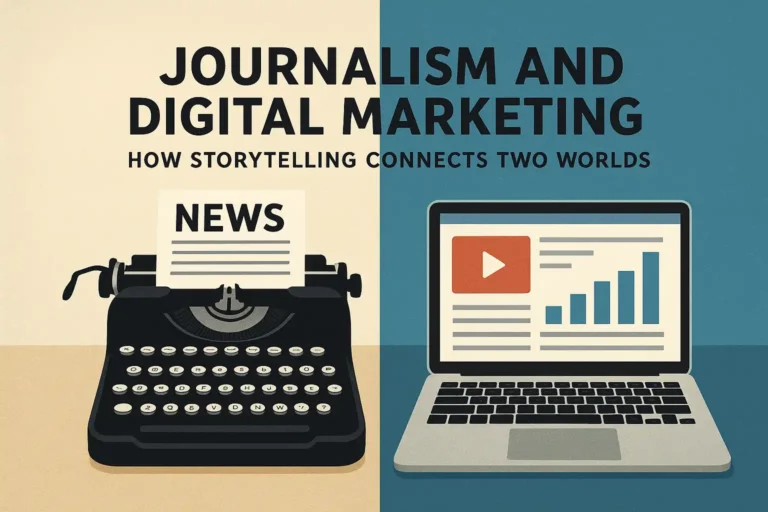
Journalism and Digital Marketing: How Storytelling Connects Two Worlds
Storytelling is one of humanity’s oldest traditions—and one of its most powerful tools. Whether it’s a journalist reporting from the frontlines or a brand marketer creating a campaign, the common thread is the ability to turn information into a narrative that resonates.
At first glance, journalism and digital marketing may seem like two very different worlds. One seeks to inform and hold power accountable, while the other aims to persuade and build brand loyalty. Yet, both depend on storytelling to achieve impact. Let’s explore how these two fields connect through the art of narrative.
Storytelling in Journalism: Informing with Impact
Journalism is built on facts, but facts alone don’t always capture attention. Storytelling bridges that gap.
Humanizing Information: Statistics or policies become meaningful when tied to human stories.
Building Trust: A journalist’s credibility often rests not just on accuracy, but on how clearly and ethically a story is told.
Driving Change: Investigative features and narrative reports have the power to shift public opinion and even shape policy.
Great journalism doesn’t just inform—it moves people to care.
Storytelling in Digital Marketing: Connecting with Audiences
In the fast-paced world of digital marketing, attention is currency. Storytelling helps brands rise above the noise.
Crafting Identity: Narratives give brands personality beyond their products.
Engaging Emotions: A well-told story sparks connection—turning viewers into followers, and followers into customers.
Influencing Action: Whether it’s a purchase, a subscription, or a share, stories inspire people to act.
Much like journalism, marketing thrives when audiences feel a genuine connection.
Where the Two Worlds Meet
The parallels are striking:
Both simplify complex ideas for broader audiences.
Both aim to spark emotions—empathy in journalism, excitement or trust in marketing.
Both foster communities, whether civic or brand-driven.
In fact, marketers often borrow from journalistic techniques—conducting interviews, showcasing customer stories, or highlighting real-life case studies. Similarly, journalists today rely on digital marketing tools like SEO, multimedia formats, and social media promotion to expand their reach.
The Future of Storytelling: A Blended Space
The line between journalism and digital marketing is increasingly blurred. Sponsored content, branded storytelling, and influencer collaborations live in a space that blends the ethics of journalism with the strategies of marketing.
Yet one principle remains constant: authenticity. Readers and audiences can sense when a story is forced. Whether reporting the news or promoting a brand, the most successful storytellers respect their audience’s intelligence and values.
Final Thoughts
Journalism and digital marketing may have different goals—truth versus sales—but they share the same core belief: that stories have the power to change minds, build trust, and inspire action.
And in today’s digital-first world, it’s not the facts or features alone that matter most. It’s how you tell the story.